
Our External Speaker Webinar Series got off to a flying start for 2025 last week, as we welcomed the wonderful Victoria Anderson, Clinical Exercise Physiologist (AHCS), from Longevity Health and Fitness Ltd back, this time speaking to the team on “Rehabilitation and Patient Support – Clinical Exercise Collaboration” and explaining more about the role and aims of the Clinical Exercise Physiologist (CEP), when they would be introduced into the client’s MDT, and the benefits that they can bring to the client and MDT.
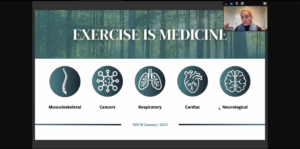
Victoria discussed the difference between CEPs, personal trainers and Physiotherapists/Neurophysiotherapist, and how their input can be integrated. With CEPs, she emphasised that exercise intervention is a medical approach, prescribed with specific aims based on the client’s condition and focusing on overall health and long-term wellbeing, aiming to reduce the risk of secondary comorbidities. Whereas Physiotherapists/ Neurophysiotherapists are typically involved in the acute stage, CEPs are introduced once the client is clinically stable and medically optimised. CEPs provide the next step in rehabilitation, often coinciding with a graded reduction in physiotherapy.
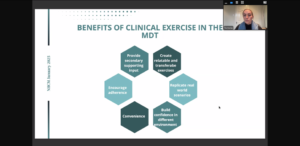
CEPs create relatable and transferable exercises, initially conducted in the client’s home environment to build comfort and confidence before transitioning to external settings. This approach integrates exercise into the client’s daily routines and real-life scenarios, promoting adherence and long-term maintenance. They therefore look to mimic real-life scenarios within the home environment, introducing exercises into ADLs to grade and introduce exercise outside of home, which benefits the client from both a rehabilitation perspective and also provides them with transferable skills they can take into the community. The replication of external environments within the home also supports a controlled introduction and exposure to external stimuli and environments, and can help with desensitising the client and building tolerance.
Victoria stressed the importance of tailoring exercises to the client’s past activities, interests, and future goals. This personalisation makes exercises more meaningful and enjoyable, less like a ‘therapy’ session, so increasing the client’s willingness to participate. CEPs also integrate MDT rehabilitation goals into their exercise plans, layering the benefits they provide making them engaging and beneficial. Building exercise into daily routines and educating support workers helps create consistency and confidence, enabling clients to see and feel the benefits of the exercises, fueling their motivation and progress.
A big thank you, Victoria, for enhancing our understanding of the benefits of CEPs in addressing rehabilitation needs, reducing risks, and promoting long-term health…and for brightening up an otherwise cold and wet January morning!