“Everything’s fine…”
In our June External Speaker Webinar with Dr Freddie Byrne and Dr jocelyne kenny, from Living with ABI ltd, that simple phrase became a powerful reminder of what can be missed in brain injury rehabilitation.
Because when a parent sustains a brain injury, “fine” can look very different for each member of the family.
The session challenged us to pause and reflect on a question:
“Who else is living with the consequences of that injury, and how are we supporting them?”
This question led to lots of rich discussion, which centred around 5 key themes.
1) Brain injury is a family condition, not an individual one.
Rehabilitation often focuses on the injured person’s function and independence; the relational impact, particularly on children, is profound and frequently overlooked. Relationships define identity, yet they are often given lower priority in traditional rehab models.
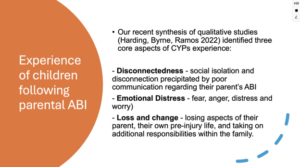
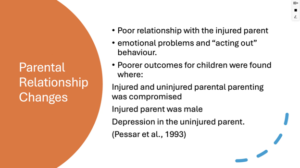
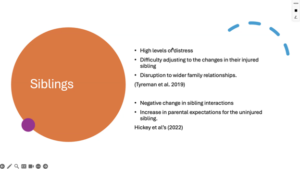
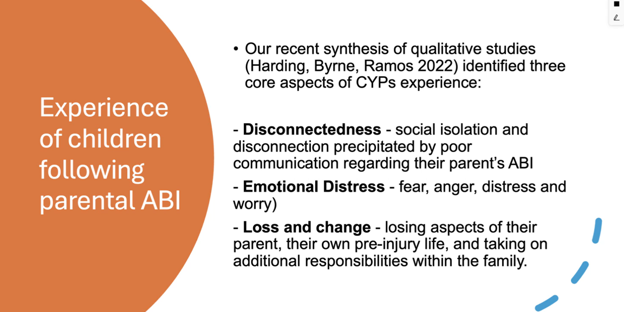
2) The impact on children is significant and often hidden.
Research highlighted in the session shows elevated rates of:
– Emotional and behavioural difficulties
– Social isolation and anxiety
– Long-term socioeconomic challenges.
Many children take on caregiving roles or internalise distress, often without being formally recognised.
3) “Everything is fine” doesn’t mean everything is fine.
A key clinical insight was the importance of curiosity over assumption. Families may minimise impact as a coping strategy, making it essential for professionals to explore gently, but consistently, what life actually looks like for each family member.
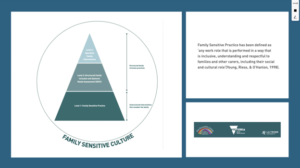
4) Family-sensitive practice doesn’t require more resources, just a shift in thinking.
Simple changes can make a significant difference:
– Including children in conversations where appropriate
– Asking relational questions, not just clinical ones
– Creating psychological safety for all family members
– Using structured family sessions alongside individual rehab.
5) Rehabilitation is about more than function.
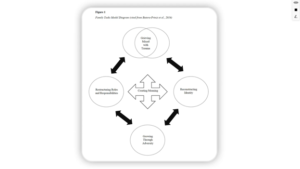
Brain injury disrupts identity, roles and life narratives. Supporting adjustment, grief and relationship change is central to meaningful recovery.
What does this mean for case management practice?
It reinforces the need to:
– Consider the family system from the outset, including at Immediate Needs Assessment
– Advocate for support for children and families, even when funding is complex
– Ensure recommendations reflect relational & psychosocial needs
– Maintain a systemic, curious approach at all times.
Family support can be harder to evidence and fund, and it raises an important question:
“If trauma, adjustment and identity changes are happening within a family but we only intervene at an individual level, can we truly describe rehabilitation as effective?”
A big thank you to Dr Byrne & Dr Kenny for sharing such valuable insights for families affected by brain injury.