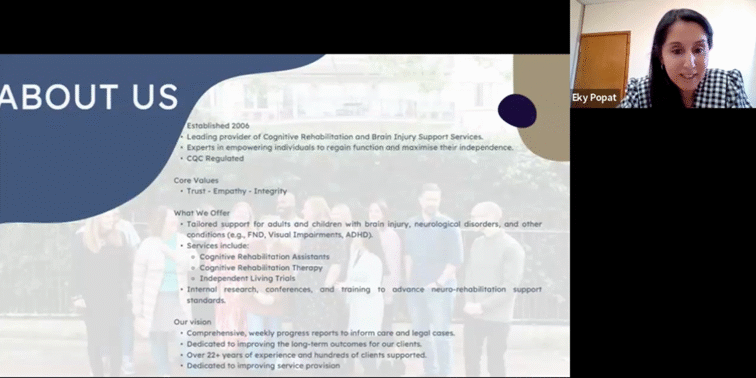
On Monday we had the pleasure of welcoming BIS Services to our External Speaker Webinar Series, with Eky Popat, Operations Director and Registered Manager, and Cameron McIntosh, ILT & ILA Lead, kicking off the week with valuable knowledge and insights regarding Independent Living Trials (ILTs) for individuals recovering from serious injury.
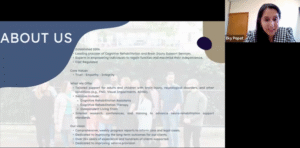
The BIS Services is the UK’s leading provider of Cognitive Rehabilitation Assistants (CRAs). They pride themselves on empowering individuals to regain function and maximise their independence, especially through ILTs and their latest innovation in service offering, Independent Living Assessments (ILAs).
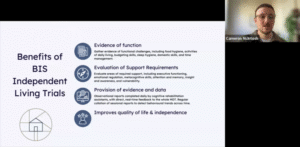
Both packages are used to assess a client’s ability to live independently and establish support requirements, putting the client’s needs at the forefront through a tailored and personalised approach. CRAs have specialist training and coordination to ensure a consistent approach. They collate evidence and data through daily observations to provide real-time feedback to the MDT, enabling effective and timely reviews, with support optimised to achieve the best outcome.
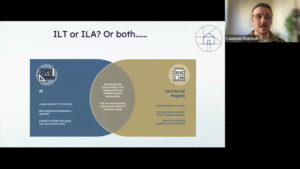
ILAs are 12-week intensive programs that help establish what living independently looks like for the client; they establish what areas the client requires more support with, which strategies are effective and the optimal amount of support needed. They can also be useful when a client is unlikely to engage for a longer period of time. There are three phases to the ILA, initially providing intensive support including constant prompting and scaffolding and assistance with problem-solving, which is then decreased in the second phase, with the final phase including unsupervised periods and evaluation of self-awareness and insight improvement. The use of various assessments is important for evidence gathering in the ILA, such as the Time Motion Study; this provides a timeline of what the client is doing throughout each day at hourly intervals, establishing the client’s routine and structure, or lack of, and is useful in providing a baseline to later establish progress.
The duration of an ILT is instead flexible and tailored to the client and can be between 12 to 18 months. It enables a more gradual and progressive approach to evaluating the client’s required support needs.
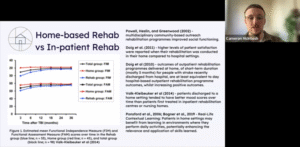
We also considered studies supporting the benefits of home-based rehabilitation compared to in-patient, and how learning and practising in the environments where they will be performing the daily activities enhances their relevance and increases the likelihood of continued use.
Ultimately, the key purpose of an ILT or ILA is to improve the quality of life for clients recovering from serious injury in a supported, subtle but comprehensive way in an environment that is personal to them, promoting independence and dignity.
Thank you Eky and Cam for a very thought-provoking and relevant presentation!