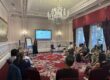
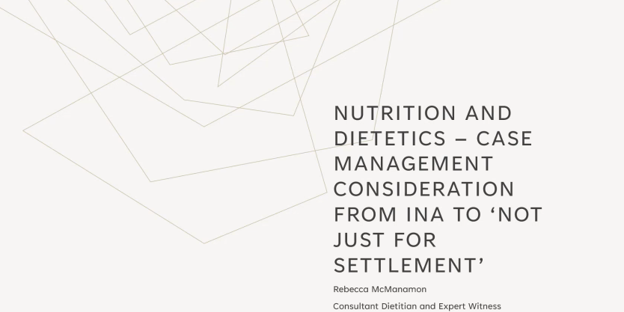
Last week, we were delighted to welcome Rebecca McManamon, Clinical Director and Consultant Dietitian at Urban Dietitians, for our External Speaker Webinar Series.
Rebecca explored an important question for case managers:
Are we considering nutrition early enough, and throughout the lifetime of a case?
A key theme was that nutritional needs are not always immediately obvious. Nutrition should be considered from the Immediate Needs Assessment (INA), including whether weight can be monitored appropriately, whether nutritional screening is indicated, and whether there are emerging concerns around weight, skin integrity, bowel management, swallowing, growth or gastrointestinal symptoms.
Rebecca explored this across a range of complex presentations, including traumatic brain injury, spinal cord injury, amputation and cerebral palsy. The discussion demonstrated how nutrition can intersect with many wider aspects of rehabilitation, from fatigue and cognition to pressure care, wound healing, bone health, equipment provision, mobility and participation in everyday life.
Some key takeaways for case management practice:
- Consider nutrition from the INA onwards – Even where dietetic intervention isn’t immediately required, establishing how weight and nutritional risk can be monitored may help identify changes early.
- Look beyond obvious nutritional problems – Fatigue, changes in weight, recurrent pressure damage, difficulties with wound healing, gastrointestinal symptoms or challenges managing food following cognitive change may all warrant further consideration.
- Think collaboratively – Dietetic input can complement the work of speech and language therapists, OTs, physiotherapists, tissue viability teams and other clinicians.
- Recognise transition points – Changes in accommodation, care arrangements, independent living, employment, ageing or a new diagnosis can alter a client’s nutritional needs.
- Keep the long-term picture in mind – Dietetic involvement may be short-term, episodic or longer term as a client’s circumstances and needs evolve.
- Rebecca summed this up particularly well with the idea that case management is “for life, not just for settlement”. The same perspective can be applied to nutrition: something that may not require intervention today can become highly relevant at a later stage of a client’s rehabilitation or life.
A really thought-provoking session and a valuable reminder of the role case managers can play in identifying nutritional considerations early, coordinating the right professional input and keeping those needs under review as part of genuinely holistic rehabilitation.
A huge thank you to Rebecca for sharing her expertise and experience with the NeuroHealth team.