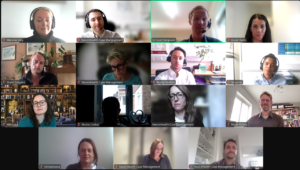
We had the great privilege of welcoming Dr Scott Ferguson, Consultant Clinical Psychologist specialising in Neuropsychological Assessment & Rehabilitation, to our October edition of the NeuroHealth External Speaker Webinar Series.
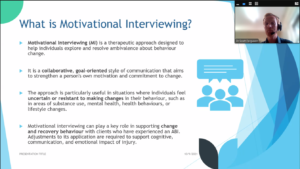
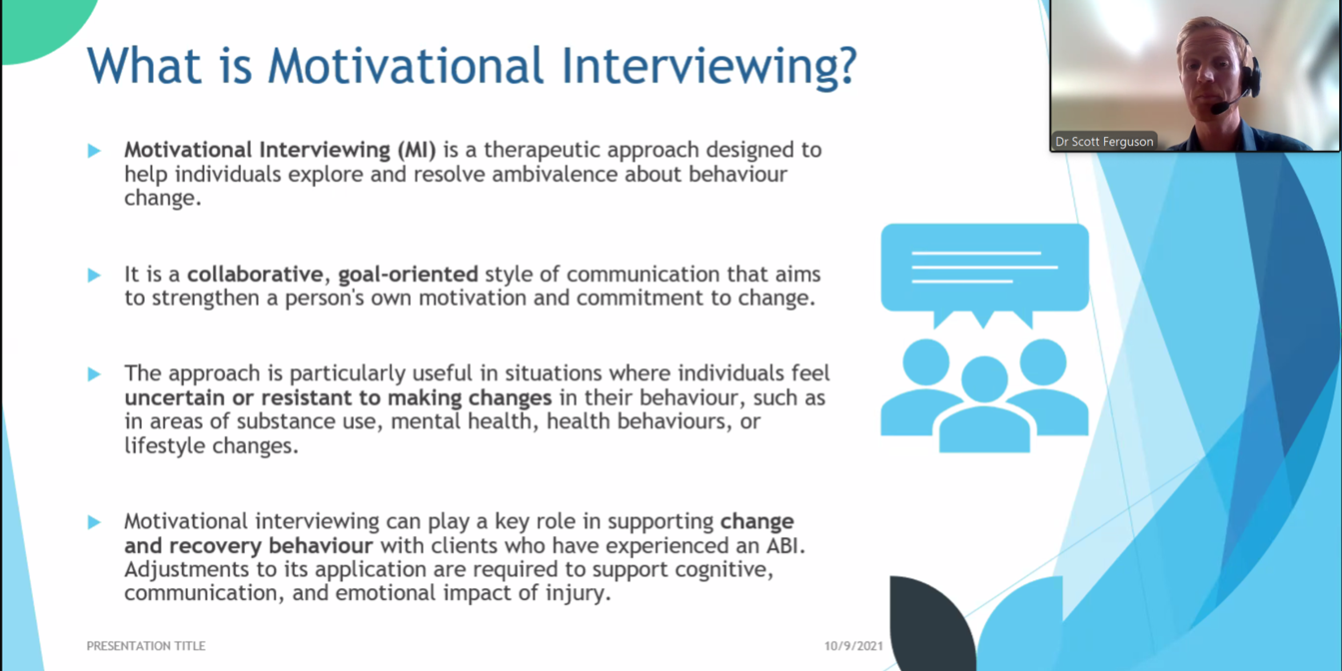
Scott presented on the fascinating subject of Motivational Interviewing (MI) and navigating the challenges and adaptations required when utilising this therapeutic approach with brain-injured clients.
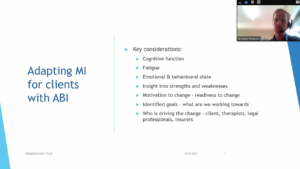
Scott explained the theory behind MI and how it is goals-focused and aims to explore and engage with the individual’s motivators, and to consider the pros and cons of behaviour choices so as to resolve ambivalence. Adjustments to the approach are required for those with brain injury, often due to limited or emerging insight and uncertainty about how to change, and also with ensuring that the goals are those of the client, rather than being driven by others, and that everyone working and supporting the client is aligned with the client’s truest motivators and goals.
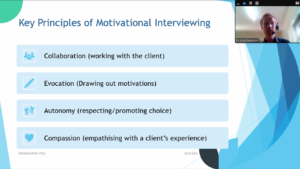
We looked further at the key principles of MI – collaboration, evocation, autonomy and compassion; which align with the fundamental approach and objectives of a Case Manager in understanding the lived experience of our clients, the influences upon them, and respecting and safely promoting their personal goals with a view to improving client outcomes.
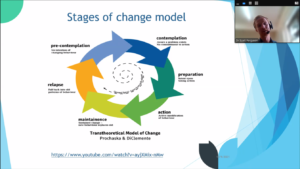
We considered the core techniques used in MI, such as open-ended questions, affirmation, reflective listening, summarising and eliciting talk of change, in relation to brain-injured clients. Scott also talked through the ‘Transtheoretical Model of Change’, which identifies the different stages of change and noted that the move from pre-contemplation to contemplation was key for Case Managers but that this takes time with brain-injured clients. Scott also highlighted that relapsing is normal but can result in feelings of failure, frustration and apathy for clients and be a barrier to progress.
Other considerations and discussions for brain-injured clients included memory issues resulting in lack of carryover, attention and focus, receptive and expressive communication difficulties, executive function difficulties and emotional regulation. We looked at how these impact upon the cycle of change and outcomes and Scott discussed approaches to adapting MI techniques for these so as to avoid ambivalence and to enable momentum for positive change.
A big thank you, Scott, for a really thought-provoking and engaging presentation on a therapeutic approach that is vital in helping our clients achieve their full potential. We look forward to you hopefully joining us again on a future webinar for another insightful discussion!